Why Submersible Sewage Pumps Clog and the Impeller Designs That Fix It
08 / 17, 2026Last month a maintenance crew in a mid-sized hotel called about a submersible sewage pump that kept tripping. They pulled it up after three days. The sewage pump impeller was a solid disc of wet wipes and hair, wound so tight the rotor barely turned. Nothing was wrong with the pump itself. The impeller design was wrong for the job. That’s the pattern I keep seeing, and it’s worth understanding before you buy.
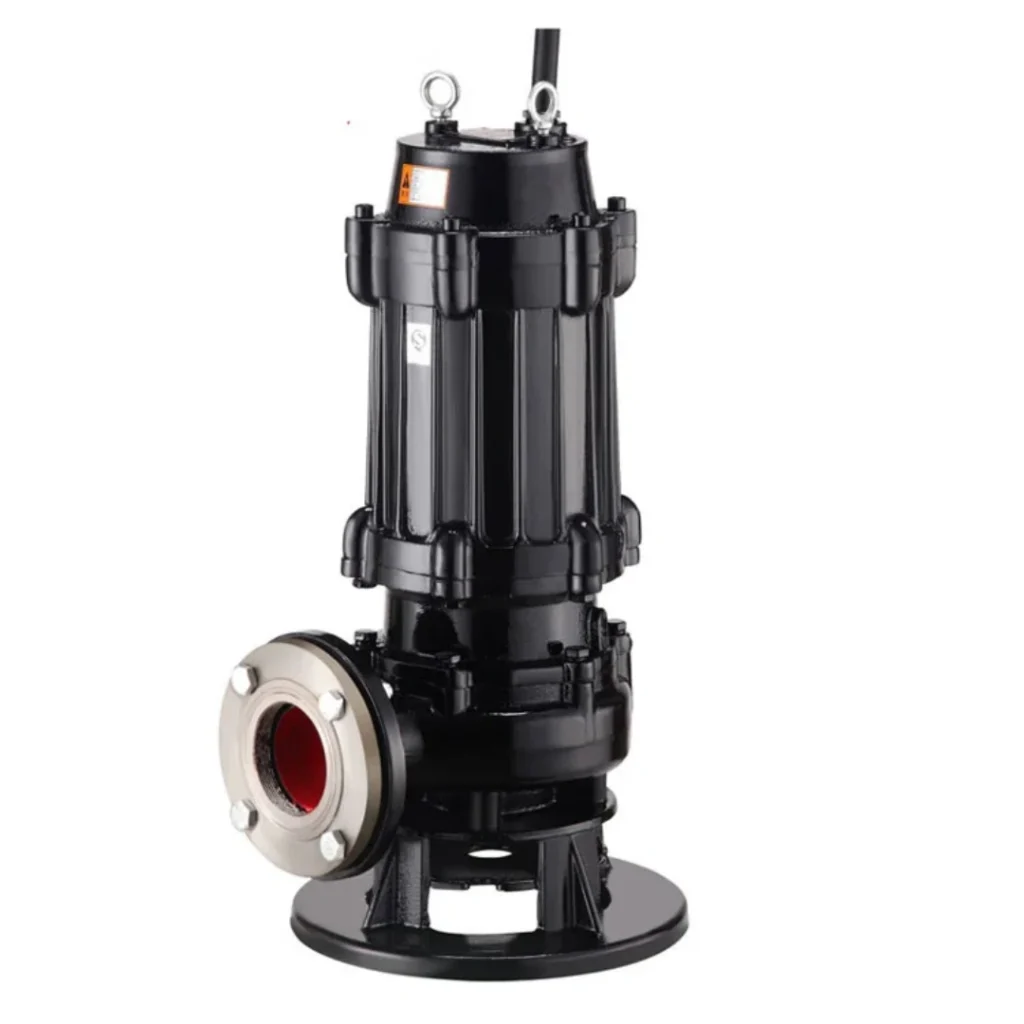
Three ways a sewage pump clogs
Fiber wrapping. Stringy solids—rags, wipes, rope, long hair—wrap around the impeller eye and shaft. Each strand tightens the knot. Open impellers with exposed vanes are the most vulnerable. This is the classic sewage pump clogging story I hear almost every week.
Debris jamming. Rocks, sand, and hard objects wedge between the impeller and the volute. The pump loses flow first, then overheats. Overheating cooks the mechanical seal, which is how a clog turns into a flooded pit.
Gas and settling. When the wet well is too small and the pump cycles too often, solids settle and gas pockets form. Air locks the suction. This one is an installation problem, not an impeller problem, but it shows up as a clog all the same.
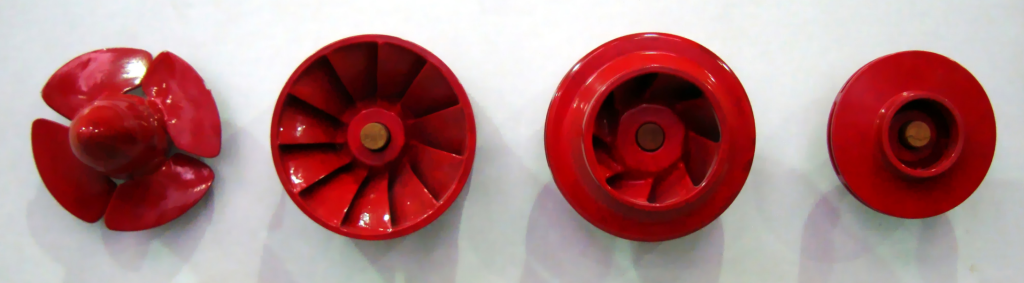
Three impeller designs that fix it
Vortex impeller. The vanes sit behind the suction opening, recessed. Solids pass through the chamber without touching the impeller at all. A vortex impeller moves solids up to roughly 80 mm in diameter and handles stringy material reasonably well. Efficiency drops compared to a closed design, typically 10-20 percent, but uptime usually matters more than a few percent of efficiency. For raw sewage with wipes in it, this is my default.
Semi-open impeller with self-cleaning vanes. The back vanes create a pressure field that pushes fibers off the impeller hub. Some designs add a cutting edge to chop small stringy material. Semi-open impellers keep efficiency closer to a closed impeller and still pass solids around 40-60 mm. Good middle ground for municipal submersible pump selection when the stream is mixed.
Grinder pump. A cutter disc spins against a fixed cutting ring and shreds everything before it reaches the pump hydraulics. Wipes, cloth, sanitary products—all ground to small particles. The grinder pump handles the worst streams but costs more, uses more power, and the cutting mechanism needs periodic maintenance. Long pipe runs with small diameters are where grinders shine.
A few rules I actually use
Match the pump chamber to your solids. A common rule: the smallest passage must be at least three times the largest expected solid. If your stream carries wet wipes, assume the worst case and move to a vortex impeller or grinder pump design.
Check the pump-down time. If the pump cycles more than six times an hour, the wet well is undersized.
And for installations with long pipe runs, remember that velocity matters. Keep flow above 0.7 m/s in discharge lines so solids don’t settle between cycles. This is the part of submersible pump selection most people skip.
Bottom line
A submersible sewage pump that clogs is rarely a pump failure. It’s a selection failure. Know your solids, match the impeller, and the same pump that failed last month will run for years. If you are sizing a wastewater pump for a new project, send me your flow, head, and solids data—I’ll help you pick the right impeller the first time.
Quick answers
Q: Why does my sewage pump keep clogging?
- A: Most sewage pump clogging comes from stringy solids wrapping around the impeller eye, hard debris jamming between the impeller and volute, or wet-well undersizing that lets solids settle and gas lock the suction. Match the impeller to the solids and the chamber size to the pump-down time.
Q: Which impeller is best for sewage pumps?
- A: It depends on the stream. A vortex impeller is the safest choice for raw sewage with wet wipes and stringy solids. A semi-open self-cleaning impeller balances efficiency and solids handling. A grinder pump is best for long, small-diameter pipe runs with tough solids.
Q: What is a non-clog impeller?
- A: A non-clog impeller has large, smooth passages and minimal surfaces where fibers can wrap. Vortex and semi-open designs both fall under the non-clog impeller label, but the exact solids size they pass varies by model.
Q: How do I start my submersible pump selection for a sewage application?
- A: Start with three numbers: flow rate, total head, and the largest solid or fiber type the pump will see. Then choose the impeller family—vortex, semi-open, or grinder—before comparing motor power and material.
Q: How often does a grinder pump need maintenance?
- A: Grinder pump cutter discs and cutting rings wear over time. Inspect them every 12 to 24 months in normal municipal service, more often if the stream contains sand or grit.