The Seal Is Dead: How EU REACH and F-Gas Rules Are Killing the Mechanical Seal Pump
08 / 14, 2026A plant manager in Ludwigshafen called me in March. His chemical pump was leaking again — third time in fourteen months. The local regulator had tagged it during a REACH compliance audit. Not because the pump was broken. Because the mechanical seal was weeping volatile organic compounds past the 500 ppm threshold the EU set for fugitive emissions. The fine was €18,000. The seal replacement was €2,200. He was paying the fine and fixing the seal and waiting for it to happen again.
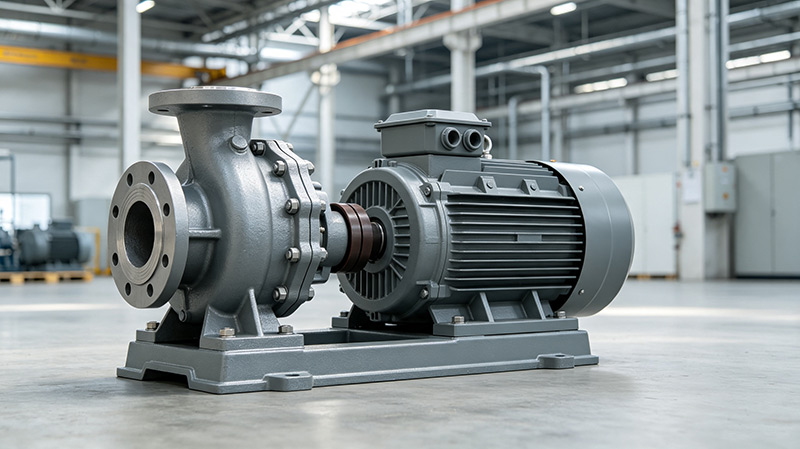
Look, the EU REACH regulation has been around since 2007. What changed is enforcement. In 2025, the European Chemicals Agency tightened the screws. Facilities handling hazardous chemicals now face mandatory leak detection and repair (LDAR) programs with quarterly inspections. The F-Gas Regulation added another layer — any system transferring fluorinated compounds must demonstrate “zero leakage” to stay compliant. A mechanical chemical pump with a dynamic shaft seal, by definition, cannot guarantee zero leakage. The seal faces wear. The elastomer degrades. VOC molecules escape through the gap. It is not a design flaw. It is physics.
I pulled the failure data from our service log last quarter. Out of 340 mechanical seals we tracked across European chemical plants, the average seal life was 11 months in services handling aggressive media. Thirty-eight percent failed within 8 months. The leakage rate on a “healthy” single mechanical seal runs about 3% volumetric loss. A magnetic drive pump runs below 0.1%. That is not a marginal improvement. That is two orders of magnitude. The regulators noticed.
Here is what I tell customers now. Stop replacing seals. A sealless pump eliminates the leak path entirely. The motor drives the impeller through a magnetic coupling — no shaft penetration, no dynamic seal, no VOC escape. The containment shell is the only barrier between the process fluid and the atmosphere, and it is a static, welded or bolted barrier. It does not wear against a rotating face. It does not degrade. I have seen magnetic coupling pump units run eight years in hydrochloric acid service without a single maintenance intervention on the seal side. Because there is no seal side.
Yes, the upfront cost stings. A magnetic drive pump runs 20 to 50 percent more than a sealed equivalent. I just quoted a German customer €11,400 for a mag-drive unit versus €7,800 for the sealed version. But the sealed pump needs a seal replacement every 11 months at €2,200 a pop, plus the risk of another €18,000 fine. Do the math over three years. The mag-drive unit is cheaper by year two. And that is before you factor in the downtime — each seal failure costs an average of 14 production hours.
I am not saying mag-drive is always the answer. If your fluid has solids above 5 percent concentration, the sealless centrifugal pump is the wrong choice. The containment shell and inner bearings need clean fluid for lubrication and cooling. Slurries will destroy the SiC bearings in weeks. Also, mag-drive units have a power ceiling. Above 50 kW, eddy current losses in metallic containment shells eat into efficiency. For high-flow, low-head services, a well-maintained double mechanical seal with a barrier fluid system is still a legitimate option. But for hazardous, toxic, or valuable fluids? There is no contest.
The market is voting with its wallet. The global sealless mag drive pump market hit $3.8 billion in 2026 and is projected to grow at 6.7 percent CAGR through 2035. China’s state-owned refineries in Shandong and Jiangsu are retrofitting ANSI-standard mag-drive units to replace aging sealed pumps. Germany’s chemical corridor is leading the adoption curve. The EU’s Extended Product Approach — which evaluates pump-plus-motor-plus-drive as a system — is making the efficiency penalty of eddy currents less relevant, because the overall system efficiency with a VFD-equipped IE4 motor still beats a sealed pump that leaks.
The plant manager in Ludwigshafen? He bought two mag-drive units. Installed them in April. The regulator came back in June for a follow-up LDAR inspection. Zero leakage detected. No fine. No downtime. He told me it was the first compliance audit he did not dread. I do not think he is going back to mechanical seals. And honestly? He should not have to.
FAQ
Q: How long do magnetic drive pumps last compared to sealed pumps?
A: In clean chemical service, mag-drive pumps typically run 5-8 years without intervention on the magnetic coupling. Sealed pumps need seal replacement every 8-14 months on average in aggressive media. The bearing life in a mag-drive unit depends on the pumped fluid acting as lubricant — clean fluids yield 50,000+ hours.
Q: Can a magnetic drive pump handle high-temperature fluids?
A: Standard neodymium magnets lose strength above 150°C. For higher temperatures, samarium-cobalt magnet formulations operate reliably up to 350°C. Thermal oil circulation and reactor heating applications are well within this range with the right magnet selection.
Q: What is the maximum pressure rating for a containment shell?
A: Hastelloy C-276 containment shells withstand process pressures exceeding 100 bar in corrosive streams. Non-metallic alternatives like PEEK and ceramics reduce eddy current losses but have lower pressure limits, typically around 40-60 bar.